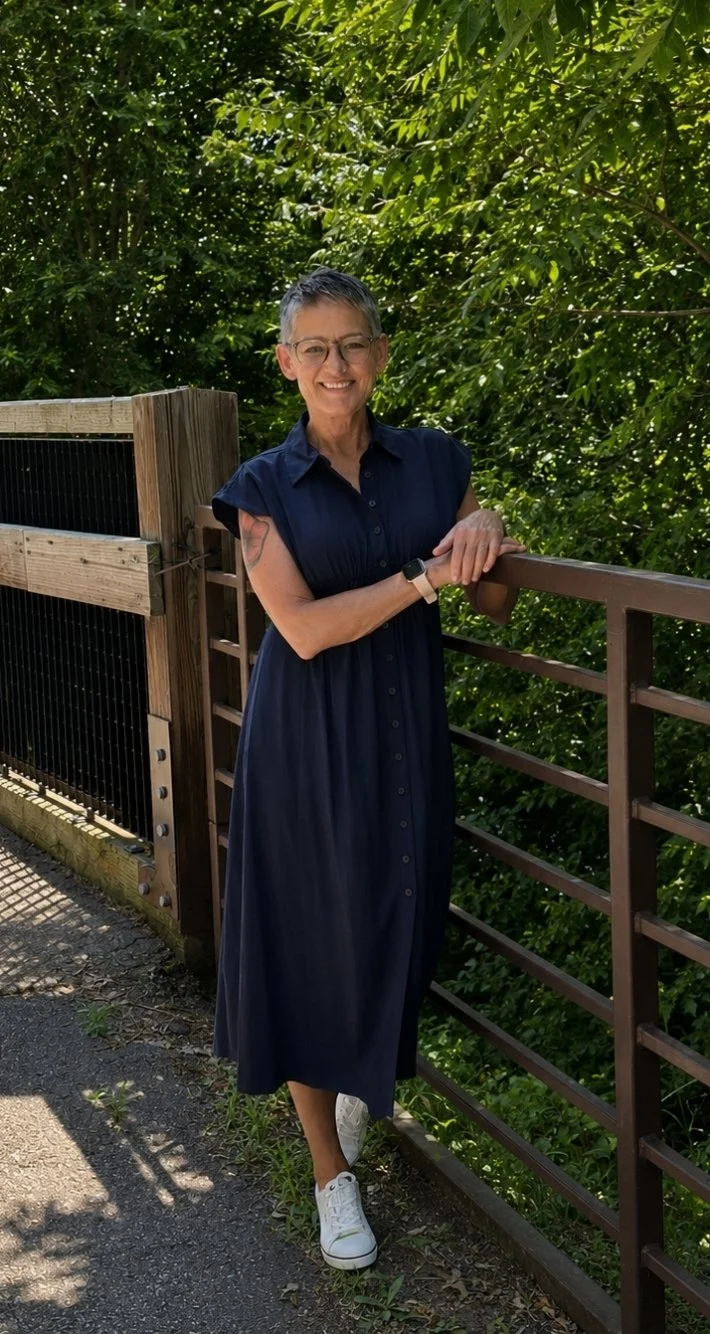
Communication, Equity, and Recovery: A Synthesis of Scholarship and Service
My personal, academic, and professional journeys have converged into a single, clear priority: serving my community through trauma‑informed, equity‑centered care that reduces barriers for individuals impacted by incarceration, substance use disorder, and homelessness. My lived experience with complex trauma and long‑term recovery shaped my understanding of how communication, access, and trust influence health outcomes. My graduate studies in communication deepened that understanding, giving me theoretical and analytical tools to transform personal insight into professional practice. Through Public Health AmeriCorps service, I was able to translate these goals into action by building Sober Strong, a program that reflects my commitment to dignity, autonomy, and community‑rooted recovery.
Across my academic work, I learned how communication theory explains the ways people adopt health interventions, how stigma shapes public perception, and how policy can either expand or restrict access to care. Studying Diffusion of Innovation, the Health Belief Model, Agenda Setting Theory, Social Norms Theory, and trauma‑informed communication helped me understand why individuals struggle to engage with services and how systems can unintentionally reinforce barriers. I applied these theories directly to my professional practice, designing Sober Strong as a program that centers autonomy, reduces fear‑based messaging, and builds trust through consistent, compassionate communication.
My AmeriCorps service allowed me to put research methods into practice by collecting and analyzing data, administering surveys, and using evidence to refine programming. Over three years, I supported 101 participants and facilitated nearly 4,000 distinct interactions, each one an opportunity to apply trauma‑informed care, resource navigation, and wellness support. I incorporated art and writing projects, volunteer opportunities, speakers, and workshops to create multiple pathways for engagement, recognizing that recovery is not linear and must be self‑directed. I used new media to communicate with participants, share resources, and build a digital community that extended beyond the walls of the YMCA.
My work consistently prioritized diversity and inclusion by designing programming responsive to individuals with varied backgrounds, especially those navigating incarceration, poverty, and homelessness. I collaborated with harm‑reduction initiatives and local task forces to advocate for safe and sober spaces, equitable access, and community‑driven solutions. Through critical thinking and creative problem‑solving, I adapted the program to meet emerging needs, applied for grants, and strengthened partnerships that expanded its reach.
The YMCA of the Chippewa Valley has now adopted Sober Strong as ongoing programming for both men and women, pairing it with a complementary annual membership that encourages participants to explore wellness activities aligned with their recovery goals. This adoption reflects not only the program’s impact but also the alignment of my personal mission, academic training, and professional practice. My work embodies ethical commitment, excellence, and a deep dedication to building healthier, more compassionate systems for those who need them most.
2024 CDC Public Health AmeriCorps Video